Florida Seawall Permits
Seawall permitting in Florida can involve more than one agency, and the requirements for a small repair can be very different from those for replacement or new construction.
Depending on the property and proposed work, a seawall project may involve city or county approval, Florida environmental permitting, federal authorization, coastal construction requirements, or a combination of them.
The key question is not simply, “Do I need a seawall permit?” It is:
What work is being proposed, where is the property, which waterway is involved, and which agencies have jurisdiction over that specific activity?
Do You Need a Permit to Repair a Seawall in Florida?
Sometimes.
Florida does not have one universal permit rule covering every seawall repair.
Permit requirements can depend on:
- whether the work is maintenance, repair, restoration, replacement or new construction;
- how much of the wall is being altered;
- whether the seawall is moving waterward;
- whether fill is being placed;
- whether work occurs in regulated waters or wetlands;
- whether the waterway is navigable;
- city or county requirements;
- mangroves, seagrass or other environmental resources;
- whether docks, boat lifts or dredging are included;
- whether the property is seaward of Florida’s Coastal Construction Control Line.
Some qualifying activities may be exempt from a particular state permit or eligible for a general permit. That does not necessarily mean the project requires no approval from any other agency.
The Four Permit Layers to Check
For many Florida seawall projects, it helps to think about permitting in four separate layers.
| Permit Layer | What It Can Cover |
|---|---|
| City / County | Building, structural, marine, zoning, engineering, floodplain and local waterfront requirements |
| Florida Environmental Permitting | Environmental Resource Permitting and related state shoreline or submerged-land requirements |
| Federal | U.S. Army Corps authorization under applicable federal laws, including Section 404 and Section 10 where jurisdiction applies |
| Coastal Construction | Additional Florida DEP requirements for applicable construction seaward of the Coastal Construction Control Line |
A project can satisfy one layer and still require authorization under another.
1. City and County Seawall Permits
Local permitting should be checked first because Florida cities and counties can have their own requirements for seawall repair, replacement and construction.
Local review may involve:
- building permits;
- structural plans;
- marine construction permits;
- engineering review;
- surveys;
- wall elevation requirements;
- waterfront setback or alignment rules;
- floodplain requirements;
- dock and boat-lift coordination;
- required inspections.
The permitting authority can change even between neighboring waterfront properties if they are located in different municipalities or one property is inside a city while another is in unincorporated county territory.
This is why a permit obtained for a similar project in another Florida city should not be treated as evidence that the same requirements apply to your property.
2. Florida Environmental Resource Permitting
Florida’s Environmental Resource Permitting program regulates many activities that alter surface water, wetlands and related environmental resources unless a specific exemption applies.
Depending on location, ERP responsibilities can involve the Florida Department of Environmental Protection, a water management district or a delegated local program.
Broward and Hillsborough counties are examples of areas where delegated local environmental programs can be relevant to certain ERP-related applications.
For seawall work, the state permitting pathway can depend on whether the project qualifies as:
- routine maintenance;
- an exemption;
- a general permit activity;
- an individual permit activity;
- another authorized category.
Do not assume that “repair” automatically means permit-exempt. The actual construction activity and the conditions attached to the applicable exemption or permit category matter.
3. Federal Seawall Permits: USACE Section 404 and Section 10
Federal authorization can also apply to Florida shoreline projects.
The U.S. Army Corps of Engineers administers federal regulatory programs that can affect seawalls, bulkheads and other shoreline-stabilization work.
Clean Water Act Section 404
Section 404 regulates certain discharges of dredged or fill material into waters of the United States.
As of 2026, the U.S. Army Corps of Engineers is the federal Section 404 permitting authority throughout Florida.
Florida previously administered a State 404 Program for certain assumed waters, but federal court action in February 2024 vacated EPA’s approval of that program. Florida DEP states that activity under the State 404 Program remains paused, while EPA and USACE identify the Corps as the current Section 404 permitting authority in Florida.
This is separate from Florida’s state Environmental Resource Permitting program, which continues to apply where applicable.
Rivers and Harbors Act Section 10
Section 10 can apply to structures or work in navigable waters of the United States.
Depending on the location and project, seawall or shoreline work may therefore involve federal review even where the project does not appear to involve a traditional wetland fill activity.
Whether Section 10, Section 404 or another federal authorization applies should be determined from the actual waterway and proposed scope.
Florida’s State 404 Program Is Currently Paused
This is an important distinction because older Florida permit information can create confusion.
Florida received approval to administer Section 404 permitting in certain waters in 2020.
On February 15, 2024, a federal court vacated EPA’s approval of Florida’s program. Florida DEP’s current program update states that its authority to issue State 404 permits was removed and State 404 activity is paused.
EPA likewise identifies the U.S. Army Corps of Engineers as the current Section 404 permitting authority for Florida.
This means homeowners should not rely on older webpages, articles or permit guides that still describe Florida DEP as actively issuing federal Section 404 permits under the former assumed program.
What Changed With Federal Nationwide Permits in 2026?
The U.S. Army Corps reissued its Nationwide Permits in 2026.
The 2026 Nationwide Permits became effective on March 15, 2026 and are scheduled to remain effective through March 15, 2031 unless modified or otherwise changed.
Nationwide permits authorize categories of activities that have been determined to result in no more than minimal individual and cumulative adverse environmental effects when all applicable conditions are met.
For shoreline work, potentially relevant categories can include:
- maintenance activities;
- bank stabilization;
- certain minor discharges;
- living shoreline activities;
- other qualifying activities depending on the project.
Nationwide Permit 13 addresses qualifying bank-stabilization activities, but the fact that a project is a seawall or shoreline-stabilization project does not automatically mean NWP 13 applies.
Applicable nationwide permit conditions, regional conditions and any required preconstruction notification must still be considered.
4. Coastal Construction Control Line Permits
Florida’s Coastal Construction Control Line, commonly called the CCCL, creates an additional permitting layer along certain sandy Gulf, Atlantic and Straits of Florida beaches.
The CCCL identifies an area where construction and excavation can be subject to special siting and design requirements because of storm, erosion, beach and dune conditions.
Unless an exemption applies, construction or excavation seaward of an established CCCL generally requires authorization from Florida DEP’s coastal program.
A CCCL is not simply a normal building setback line. It identifies a state coastal regulatory area.
A Gulf-front or Atlantic-front seawall project can therefore have different permitting considerations from a wall along an inland residential canal.
Does Every Florida Coastal Property Have a CCCL?
No.
The CCCL applies to established coastal areas along specified sandy beaches. Other coastal areas can be subject to different statutory requirements.
For example, Florida DEP notes that certain sandy “pocket beach” areas where no CCCL has been established can instead be subject to a statutory 50-foot setback framework.
The property location should therefore be checked rather than assuming all Florida waterfront parcels are regulated the same way.
Is Seawall Repair Permit-Exempt in Florida?
Some seawall activities can qualify for exemptions under Florida law and rule, but exemptions contain specific conditions.
Examples in Florida’s ERP framework include certain qualifying:
- seawall construction or repair in artificial waterways;
- restoration or repair of existing seawalls;
- shoreline stabilization between adjoining existing structures;
- specific stabilization activities;
- routine maintenance.
The important word is qualifying.
An exemption from one state permit does not necessarily remove:
- local building or marine permit requirements;
- federal Section 10 requirements;
- federal Section 404 requirements;
- CCCL requirements;
- requirements involving sovereign submerged lands;
- other environmental restrictions.
The Florida 18-Inch Seawall Rule
Florida permit discussions sometimes refer to an “18-inch rule” for seawalls.
This should not be interpreted as permission to move any seawall in Florida 18 inches waterward.
Florida’s ERP framework includes an exemption for certain qualifying restoration or repair of an existing seawall or riprap where, among other conditions, the restored structure is no more than 18 inches waterward of its previous location.
Eligibility depends on satisfying the conditions of the applicable exemption, and separate requirements can still apply.
For example, a project may still need review for:
- local seawall alignment requirements;
- federal authorization;
- navigation impacts;
- Chapter 161 coastal requirements;
- environmental resources;
- submerged lands.
The 18-inch provision is a condition within particular regulatory pathways—not a blanket statewide right to reclaim 18 inches of waterway.
Can You Replace a Seawall in the Same Location Without a Permit?
Do not assume so.
Returning a seawall to its previous location may make some regulatory pathways more straightforward than moving it farther waterward, but the project can still require:
- local building permits;
- engineering;
- state review;
- federal authorization;
- coastal permits;
- environmental review.
Learn more about seawall replacement in Florida.
Does Minor Seawall Repair Require the Same Permit as Replacement?
Not necessarily.
There can be an important difference between:
- routine maintenance;
- localized concrete repair;
- joint repair;
- void stabilization;
- substantial structural reconstruction;
- partial replacement;
- complete replacement.
A project that begins as a localized repair can also change permitting category if the actual construction scope expands significantly after work begins.
The permit determination should therefore be based on the planned scope—not simply the word “repair” written on an estimate.
Do Polyurethane Seawall Repairs Require a Permit?
It depends on what is being done.
Polyurethane injection used entirely behind an existing wall can present a different permitting question from structural reconstruction or placement of materials in regulated waters.
The complete project should be considered, including whether it also involves:
- joint reconstruction;
- wall modification;
- excavation;
- fill placement;
- waterward work;
- structural changes.
Learn more about polyurethane seawall repair.
Does Seawall Cap Repair Require a Permit?
Localized cap maintenance can be treated differently from reconstructing a large structural cap or modifying the seawall itself.
The permit question can depend on:
- amount of concrete being removed and replaced;
- whether reinforcement is being reconstructed;
- whether wall geometry changes;
- whether engineering is required;
- local building-permit thresholds;
- whether related marine work is included.
Learn more about seawall cap repair.
Do Tieback and Anchor Repairs Require Permits?
Structural work involving anchors, tiebacks or other seawall support components can require local structural review and engineering depending on the jurisdiction and scope.
Permit requirements can also be affected by:
- excavation behind the wall;
- property-line conditions;
- utilities;
- changes to the wall itself;
- work occurring in regulated waters.
There is no universal Florida anchor spacing, tieback design or permit exemption that should be applied without reviewing the actual project.
What If the Project Includes a Dock or Boat Lift?
Dock and boat-lift work can have its own permitting requirements.
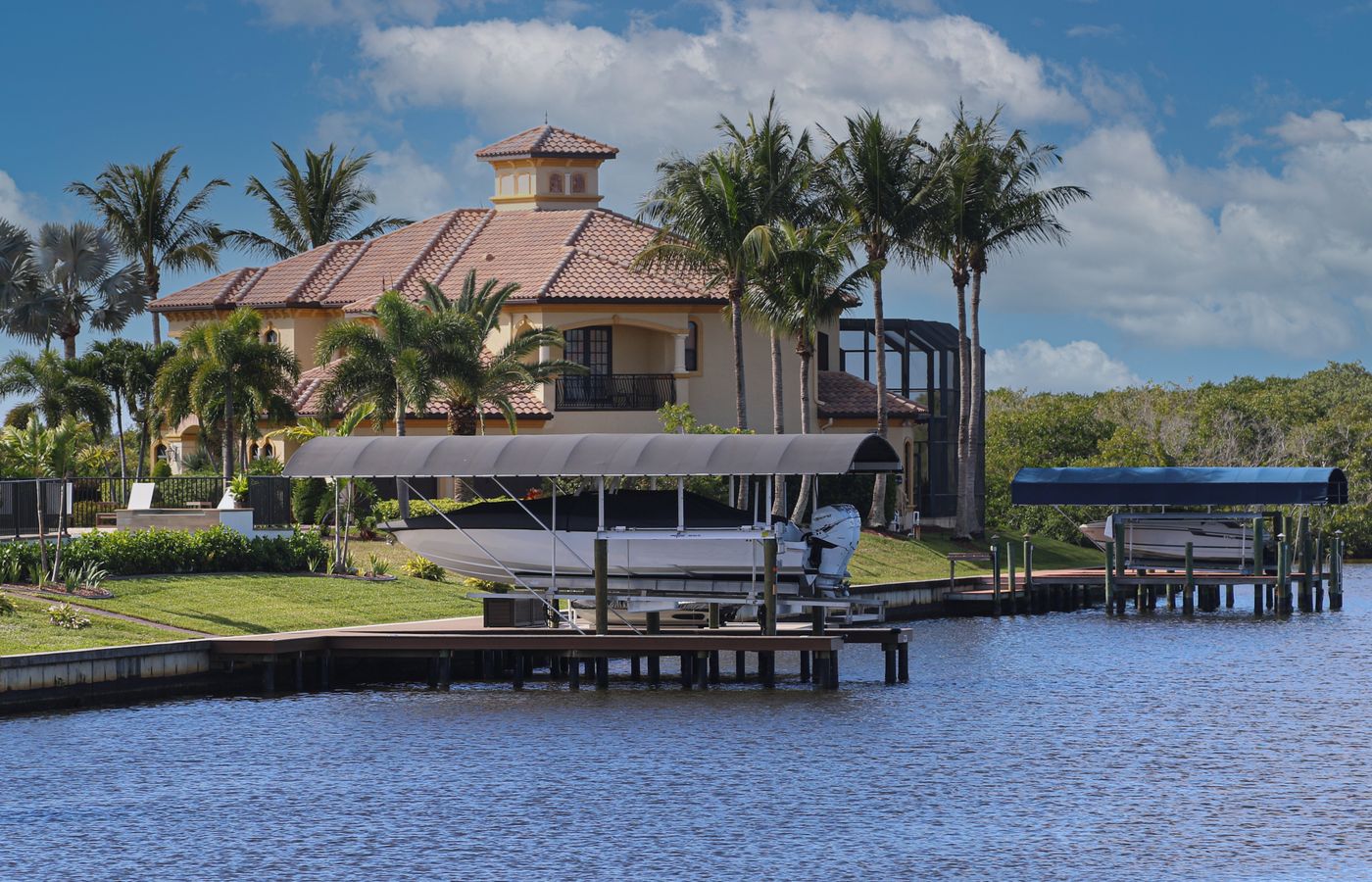
Do not assume a seawall permit automatically authorizes:
- a new dock;
- dock expansion;
- boat-lift installation;
- new pilings;
- dredging;
- utility work;
- relocation of existing structures.
If seawall construction affects a dock or lift, the associated marine work should be identified before permits are submitted so the project can be reviewed as an accurate scope.
What About Mangroves?
Mangroves are regulated separately from the seawall itself.
A seawall repair or replacement project should not assume that mangroves can simply be removed because they interfere with construction access.

Depending on the property and proposed activity, mangrove trimming or alteration can be subject to separate Florida environmental requirements.
Environmental resources should be identified early because they can affect wall alignment, construction access and the applicable permit pathway.
What About Seagrass, Wetlands and Other Environmental Resources?
Shoreline projects can receive additional scrutiny when work could affect aquatic resources.
Potential considerations include:
- seagrass;
- wetlands;
- mangroves;
- hardbottom habitat;
- listed species habitat;
- water quality;
- navigation.
This is another reason a project that qualifies easily in an artificial residential canal may follow a different permitting path from a project on a natural shoreline.
Artificial Canal vs. Natural Waterway
The type of waterway can materially affect permitting.
Florida rules contain specific provisions for some seawall activities in artificially created waterways and legally existing residential canal systems.
A seawall along a natural river, bay, estuary or environmentally sensitive shoreline should not automatically be evaluated under the same assumptions.
Permit review may differ because of:
- environmental resources;
- navigation;
- shoreline configuration;
- adjacent wetlands;
- federal jurisdiction;
- local shoreline policies.
Do Seawall Permits Differ by Florida City?
Yes.
Local seawall requirements vary significantly.
For example, different Florida jurisdictions may establish their own requirements involving:
- minimum or maximum seawall elevation;
- substantial-repair thresholds;
- structural drawings;
- property surveys;
- inspection stages;
- marine permitting;
- drainage;
- waterward alignment;
- dock coordination.
Those rules should stay on the relevant local seawall page rather than being presented as statewide Florida requirements.
Examples of Local Permit Differences
A homeowner in Cape Coral can face a different local process from a property owner in Fort Lauderdale, Miami, Sarasota, Jacksonville or unincorporated Lee County.
Similarly, an address marketed under a nearby city name may actually fall under county jurisdiction rather than the city building department.
Before relying on a local permit guide, confirm:
- the exact property address;
- whether the property is inside municipal limits;
- the permitting authority;
- the waterway;
- the proposed scope.
What Documents May Be Needed for a Seawall Permit?
Required documentation varies by project and jurisdiction.
A seawall permit application may potentially require:
- permit application forms;
- property survey;
- site plan;
- existing seawall location;
- proposed wall location;
- wall length;
- elevation information;
- structural plans;
- engineering calculations;
- cross sections;
- details of anchors or tiebacks;
- dock and boat-lift locations;
- waterway information;
- environmental information;
- owner authorization;
- additional agency approvals.
Do not assume every project requires every item on this list. The documentation should match the applicable agency and construction scope.
Do You Need an Engineer for a Seawall Permit?
Some projects can require signed and sealed engineering documents, while minor work may follow a different process.
Engineering becomes more likely when the project involves:
- structural reconstruction;
- new seawall construction;
- full replacement;
- substantial changes in wall height;
- new structural support;
- significant wall movement;
- local code requirements for engineered plans.
The need for engineering should be determined from the applicable local requirements and project scope rather than assumed statewide.
Can You Get a Seawall Permit Before Choosing a Contractor?
That depends on the jurisdiction and how complete the project design is.
A permit application typically needs an adequately defined scope. For more substantial projects, that can require engineered plans or construction details before permit review is completed.
The important point is that permit planning should begin early enough that the chosen repair method does not later conflict with local, state or federal requirements.
How Long Does a Florida Seawall Permit Take?
There is no reliable statewide seawall permit timeline.
Review time can depend on:
- jurisdiction;
- project complexity;
- permit category;
- completeness of plans;
- whether engineering revisions are needed;
- environmental resources;
- whether multiple agencies are involved;
- whether additional information is requested.
A simple local repair permit and a replacement requiring local, state and federal review should not be expected to follow the same timeline.
How Much Does a Seawall Permit Cost?
Permit-related project cost can include more than an application fee.
Potential costs include:
- local permit fees;
- state application fees;
- surveys;
- engineering;
- environmental documentation;
- plan revisions;
- special inspections;
- professional assistance with applications.
Because requirements vary by location, there is no meaningful universal Florida seawall permit price.
See the Florida seawall repair cost guide.
Can You Start Seawall Work Before the Permit Is Issued?
Do not assume that a pending permit application authorizes construction.
If a project requires authorization, work generally should not begin until the necessary approvals are in place and any applicable preconstruction conditions have been satisfied.
Emergency conditions can sometimes be subject to separate emergency orders or emergency permitting procedures, but an emergency pathway should not be assumed simply because a repair is urgent to the property owner.
Permit Questions to Answer Before Seawall Construction
- Who has local jurisdiction? City or county?
- What is the exact project? Maintenance, repair, stabilization, replacement or new construction?
- Will the wall location change?
- Will any work or fill occur waterward of the existing shoreline?
- Is the waterway artificial or natural?
- Is it a navigable waterway?
- Are wetlands, mangroves, seagrass or other resources present?
- Is federal authorization required?
- Is the property subject to the CCCL or another coastal construction requirement?
- Are docks, lifts or dredging part of the same project?
- Are engineered plans required?
Answering those questions early can prevent a repair concept from being developed around assumptions that do not fit the property.
Seawall Repair, Replacement and Construction Have Different Permit Questions
| Project | Typical Permit Question |
|---|---|
| Routine maintenance | Does the activity qualify as maintenance or an exemption? |
| Localized repair | Does the scope remain within an applicable local/state/federal repair pathway? |
| Void stabilization | Does the complete project include regulated structural or waterside work? |
| Cap reconstruction | Does the local jurisdiction require a structural permit or engineering? |
| Structural stabilization | Are engineered plans and local structural permits required? |
| Seawall replacement | Where will the new wall be located and which local/state/federal approvals apply? |
| New seawall | Is new shoreline hardening allowable and what environmental review is required? |
Do Not Design the Project Around a Permit Shortcut
A seawall repair should first be based on the physical condition of the wall and shoreline.
Trying to force a project into a particular exemption can create problems if the resulting construction does not adequately address:
- wall movement;
- soil loss;
- structural deterioration;
- support-system failure;
- long-term shoreline conditions.
A better sequence is:
- Understand the problem.
- Define an appropriate repair or replacement scope.
- Determine which regulatory pathway applies.
- Adjust the design where required to meet applicable rules.
- Obtain necessary approvals before construction.
Compare seawall repair and replacement options.
Request a Seawall Evaluation
Before determining which permits may apply, define what is actually happening with the seawall and what type of work may be necessary.
Useful information includes:
- property address;
- city or county;
- approximate seawall length;
- existing wall material;
- visible damage;
- soil loss or settlement;
- wall movement;
- whether replacement is being considered;
- dock or boat lift present;
- clear photographs of the seawall and waterfront.
The information can be used to better understand the likely project scope and, where available, connect the request with an appropriate marine professional serving the area.
Related Seawall Guides
Seawall Construction
How Florida seawall systems are assembled, including materials, caps, anchors, drainage, access and permits.
Read GuideSeawall Replacement
When replacement becomes more practical and what Florida seawall replacement planning should include.
Read GuideSeawall vs. Bulkhead
Understand the engineering difference, Florida terminology, shared materials and repair implications.
Read Guide