Seawall Inspection in Florida
A seawall inspection can help determine whether visible cracking, soil loss, settlement, concrete deterioration or wall movement is a localized issue or a sign of a larger structural or shoreline problem.
The purpose is not simply to label a seawall as “good” or “bad.” A useful evaluation should help establish what is happening, where it is happening, how extensive the problem appears to be and what should be investigated next.
For Florida waterfront properties, that means looking beyond the most obvious crack or damaged section. The wall, cap, joints, soil behind the wall, visible support conditions, drainage, docks, boat lifts and surrounding waterfront can all provide useful clues.
When Should You Have a Seawall Inspected?
A seawall does not need to collapse before an evaluation becomes useful.
Consider having the wall evaluated when you notice a new or worsening condition such as:
- soil washing out behind the seawall;
- depressions or holes forming near the wall;
- sinking pavers, slabs or landscaping;
- open or widening seawall joints;
- cracked or displaced cap sections;
- concrete spalling;
- rust staining;
- exposed reinforcing steel;
- wall leaning or bowing;
- visible displacement between sections;
- recurring voids behind the wall;
- changes around docks or boat lifts;
- water repeatedly passing through or around the wall;
- new damage after a storm, unusual high water or impact event.
Multiple symptoms occurring together can be more significant than one isolated cosmetic defect.
Review the signs that a seawall may be failing.
What Should a Seawall Inspection Look At?
The exact scope depends on the wall material, waterfront setting, visible symptoms and reason for the inspection, but several areas commonly deserve attention.
Seawall Alignment and Movement
The wall should be observed for leaning, bowing, displacement, changes in alignment or movement between sections.
Movement can indicate a different level of concern than a small isolated surface crack because it may involve the wall, retained soil, anchoring system, supporting conditions or several factors acting together.
Concrete Panels and Wall Face
Concrete seawalls should be checked for cracking, spalling, exposed reinforcement, rust staining, deterioration around joints and damaged sections of the wall face.
The location and extent of deterioration matter. One localized defect should not automatically be treated the same as widespread concrete damage.
Seawall Cap
The cap can be checked for cracks, separation, displacement, spalling, rust staining and signs that movement may be occurring below or around it.
A damaged cap does not automatically mean the entire seawall must be replaced. The condition of the cap should be considered together with the rest of the wall.
Joints and Openings
Open or deteriorated joints can provide a pathway for water and retained soil to move through the wall.
An inspection should therefore consider both the visible joint and whether there are corresponding signs of soil loss or settlement behind it.
Soil Behind the Seawall
The ground behind the seawall can reveal problems that are not obvious from the water side.
Look for:
- depressions;
- soft or hollow-feeling areas;
- recurring loss of fill;
- sinking pavers;
- settlement in slabs;
- holes near the cap;
- visible voids;
- changes around drainage outlets.
These symptoms can point toward soil migration or void formation rather than a simple landscaping issue.
Anchors, Tiebacks and Support
Many seawalls rely on concealed support components such as anchors, tiebacks or deadman systems.
Because much of this system may not be visible, movement in the wall, cap or surrounding ground can be an important indication that further investigation is needed.
An anchoring problem should not be diagnosed from a surface observation alone.
Drainage and Water Pathways
Water movement and drainage conditions can affect the soil retained behind a seawall.
An evaluation may consider drainage outlets, weep systems where present, obvious blocked pathways and locations where water repeatedly moves through or around the wall.
Docks and Boat Lifts
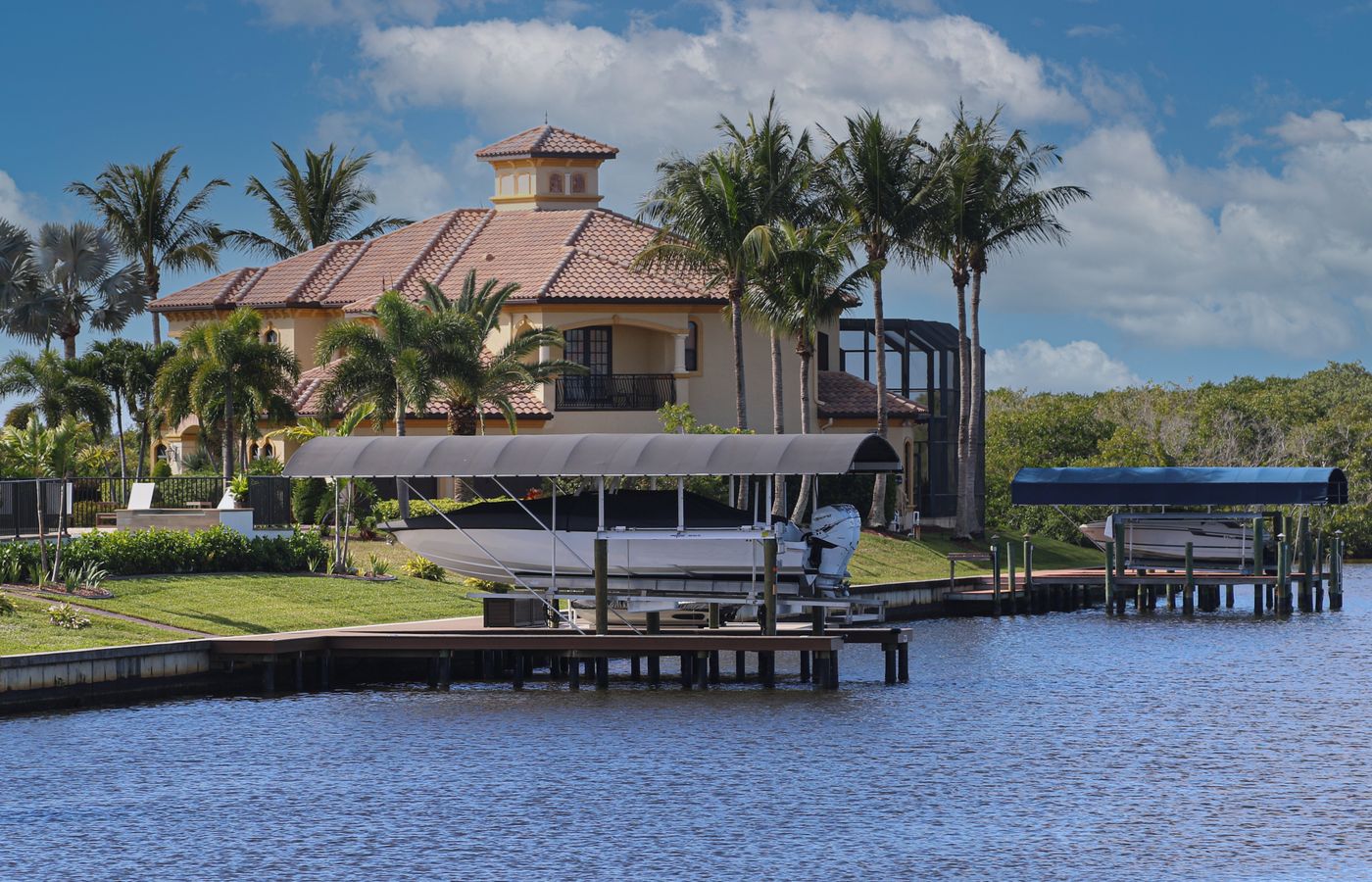
Where docks, pilings or boat lifts are present, their relationship with the seawall should also be documented.
Movement, piling locations, utilities and restricted access can affect both the diagnosis and any later repair scope.
What Different Seawall Symptoms May Mean
| What You See | What May Need Investigation |
|---|---|
| Soil depression behind the wall | Soil migration, void formation, leaking joint or another erosion pathway |
| Sinking pavers | Loss of support or voiding beneath the paved area |
| Open seawall joint | Joint deterioration and possible backfill loss |
| Cracked cap | Localized cap deterioration, movement or broader concrete distress |
| Rust staining | Possible corrosion-related concrete deterioration |
| Spalling concrete | Concrete deterioration that may involve reinforcing steel |
| Leaning wall | Wall movement, support or anchoring issue, retained-soil pressure or several factors |
| Recurring void | An underlying soil-loss pathway that may not have been corrected |
| Water overtopping the wall | Water-level or elevation issue; not automatically structural failure |
| Damage around a dock or lift | The interface between the marine structure and seawall may need evaluation |
These observations are starting points, not diagnoses. More than one condition can produce the same visible symptom.
Visual Seawall Inspection vs. Detailed Structural Evaluation
Not every seawall evaluation has the same purpose or level of detail.
General Visual Evaluation
A visual evaluation can help document obvious conditions such as cracking, spalling, joint openings, settlement, soil loss and wall movement.
This may be useful when a homeowner first notices a problem and wants to understand which issue deserves further investigation.
Detailed Condition Assessment
A more detailed assessment may include measurements, wall alignment, material deterioration, elevations, water-side observations, visible structural components and other project-specific information.
Engineering Evaluation
An engineering evaluation may be appropriate when the condition involves substantial movement, structural design questions, major reconstruction, permitting requirements or another issue requiring professional engineering judgment.
A contractor’s visual assessment and an engineer’s structural evaluation are not necessarily interchangeable services.
Pre-Purchase Seawall Evaluation
Waterfront buyers may want to better understand visible seawall conditions before purchasing a property, particularly when future repair or replacement could materially affect ownership costs.
A pre-purchase evaluation should clearly state its scope and limitations rather than imply that every concealed component has been verified.
Can a Seawall Be Inspected From Land Only?
Land-side observations can reveal a substantial amount of useful information, particularly soil settlement, cap condition, wall alignment and visible joint problems.
However, some conditions may also warrant observation from the water side or below the normal waterline where practical and appropriate.
The necessary scope depends on the seawall, waterway, visible symptoms and purpose of the evaluation.
Does Every Seawall Need an Underwater Inspection?
No.
An underwater or diver-assisted inspection can provide useful information in some circumstances, but it should not be presented as a universal requirement for every Florida seawall.
Water depth, wall type, suspected damage, visibility and the purpose of the evaluation all affect whether below-water observation would add useful information.
Seawall Inspection After a Storm or High-Water Event
After a significant storm or unusual high-water event, compare the seawall with its earlier condition rather than looking only for catastrophic damage.

Document newly developed or worsening:
- soil loss;
- yard settlement;
- joint openings;
- cap cracking;
- wall movement;
- concrete damage;
- dock or lift movement;
- erosion near the ends of the wall.
Photographs taken before and after the event can be especially useful when trying to determine whether a condition is new or worsening.
How Often Should a Seawall Be Inspected?
There is no single inspection schedule that is appropriate for every Florida seawall.
The useful frequency depends on factors such as:
- wall material;
- age and known condition;
- previous repairs;
- waterfront exposure;
- soil-loss history;
- docks or other attached marine structures;
- changes after storms or high-water events.
Property owners can monitor the wall between formal evaluations and document meaningful changes when they occur.
How Much Does a Seawall Inspection Cost?
Inspection cost depends on what is actually being requested.
A basic visual evaluation is different from a detailed engineering assessment, pre-purchase report, survey, underwater inspection or investigation requiring specialized access.
Cost factors can include:
- seawall length;
- inspection scope;
- property access;
- water-side access;
- whether measurements or elevations are needed;
- whether an engineer is required;
- whether a written report is requested;
- whether underwater observation is appropriate;
- property location.
Before comparing inspection prices, confirm what each proposed evaluation actually includes.
See the Florida seawall repair cost guide.
What Happens After a Seawall Inspection?
The next step depends on what the evaluation finds.
Localized Deterioration
If the wall remains broadly serviceable, the next step may involve a targeted repair such as joint work, cap repair, concrete restoration or erosion correction.
Soil Loss or Voids
The pathway allowing soil to migrate should be identified before lost material is simply replaced.
Some conditions may be suitable for stabilization methods such as polyurethane injection, while others require a different repair approach.
Significant Movement or Widespread Damage
More extensive structural deterioration may require additional engineering, stabilization, substantial reconstruction or consideration of replacement.
Compare seawall repair versus replacement.
Replacement
If the existing wall no longer provides a practical base for repair, replacement planning may involve engineering, alignment, elevation, access, neighboring structures and permitting.
Repair or Replace After the Inspection?
An inspection should provide useful information for the repair-versus-replacement decision, but that decision should not be reduced to one percentage or one visible defect.
Consider:
- extent of deterioration;
- wall alignment and movement;
- cap and panel condition;
- soil loss;
- support and anchoring condition;
- previous repairs;
- remaining serviceability of the existing structure;
- permitting and design requirements;
- access and construction constraints.
There is no universal rule stating that every Florida seawall should be replaced once repair reaches a particular percentage of replacement cost.
Does a Seawall Inspection Include Permit Review?
Not necessarily.
Inspecting the condition of a seawall and determining which permits may be required for the proposed repair are related but separate questions.
Once the likely repair scope is understood, permitting may depend on:
- city or county jurisdiction;
- existing wall location;
- repair versus replacement;
- whether the wall moves waterward;
- waterway type;
- environmental resources;
- docks and boat lifts;
- beach or coastal regulations;
- state or federal jurisdiction.
See the Florida seawall permit guide.
Buying a Florida Waterfront Property?
The seawall can be one of the more consequential waterfront structures to understand before purchasing a property.
Useful questions include:
- What type of seawall is present?
- Is there visible movement or deterioration?
- Is soil being lost behind the wall?
- Are previous repairs visible?
- Are docks or lifts interacting with the wall?
- Are seawall permits or plans available?
- Has the wall been repaired or replaced previously?
- Does the current condition suggest likely near-term repair work?
A general home inspection and a seawall-specific evaluation do not necessarily cover the same scope, so buyers should confirm exactly what is being inspected.
Request a Seawall Evaluation
If you are seeing cracking, soil loss, settlement, cap damage, wall movement or another change in your seawall, send the property information and photographs of the affected area.
Useful details include:
- property location;
- approximate seawall length;
- wall material, if known;
- soil loss or yard settlement;
- visible cracks or spalling;
- wall movement;
- dock or boat lift present;
- previous repairs;
- when the problem was first noticed;
- photos of both the wall and the ground behind it.
The information can be used to better understand the condition and, where available, connect the request with an appropriate marine professional serving the property area.
Related Seawall Guides
Signs of Seawall Failure
Learn the warning signs of soil loss, cracking, wall movement, anchor problems and other seawall deterioration.
Read GuideSeawall Maintenance
Practical Florida seawall maintenance focused on erosion, drainage, concrete condition, movement and storm-related changes.
Read GuideRepair or Replace a Seawall?
Compare repair, stabilization and replacement based on condition, alignment, support and remaining serviceability.
Read Guide