Seawall Repair in Palm Coast, FL
Palm Coast waterfront properties can develop seawall and bulkhead problems ranging from soil washout and sinking ground to cracked concrete, deteriorated caps, open joints and structural wall movement.
The appropriate repair depends on what is actually failing, how much of the wall is affected, whether the remaining structure is suitable for repair and whether the property faces one of Palm Coast’s saltwater canals, the Intracoastal Waterway or another tidal shoreline.
Palm Coast also has unusually specific local seawall rules. The City requires a building permit before new construction, reconstruction or repair of seawalls and revetments, and its current land-development standards include erosion-control requirements that apply during repair work.
Common Seawall Problems in Palm Coast
A seawall problem can first become visible in the ground behind the wall rather than through an obvious structural break.
- soil washing out behind the seawall;
- holes or depressions near the waterfront edge;
- sinking pavers, patios or walkways;
- voids behind the wall;
- open joints between panels;
- cracked or displaced seawall caps;
- concrete spalling and rust staining;
- exposed reinforcing steel;
- leaning or bowing wall sections;
- misaligned panels;
- erosion near wall ends;
- movement near docks and boat lifts.
One visible defect does not automatically mean complete replacement is necessary. A localized erosion pathway can require a very different repair from a wall that has lost alignment or structural support along a long section.
See the warning signs of a failing seawall.
See the Florida seawall maintenance guide.
Soil Washout Behind a Palm Coast Seawall
Soil washout develops when retained material finds a pathway through, beneath or around the seawall. Open joints, cracks, penetrations, wall movement, drainage conditions and erosion near wall ends can all contribute.
A common progression is:
Opening or erosion pathway → soil migration → underground void → surface settlement
Adding fill may improve the surface temporarily while leaving the pathway responsible for the loss active. A more complete repair should address both where soil is escaping and whether support behind the wall also needs to be restored.
Learn more about seawall erosion and soil washout repair.
Voids and Sinking Ground Near the Canal
A relatively small depression at the surface can sometimes indicate a larger underground void. Warning signs include pavers dropping toward the seawall, soft ground behind the cap, recurring holes, gaps beneath patios and settlement concentrated near panel joints.
The source of the soil loss should be investigated before the surface is simply releveled or repaved.
Polyurethane Seawall Repair in Palm Coast
Polyurethane injection may be useful for certain void-filling and soil-stabilization conditions behind a seawall that remains structurally suitable for repair.
- filling localized voids;
- restoring support beneath settled areas;
- stabilizing disturbed soil;
- supporting a broader erosion-repair project.
Polyurethane is not a substitute for failed anchors, severely deteriorated panels or a wall experiencing substantial movement. The structural condition still needs to be evaluated when displacement is visible.
Learn more about polyurethane seawall repair.
Concrete Seawall Repair in Palm Coast
Concrete seawalls can develop localized deterioration while substantial portions of the structure remain serviceable.
- surface and structural cracking;
- spalling concrete;
- rust staining;
- exposed reinforcing steel;
- damaged panel edges;
- deteriorated joints;
- panel displacement.
The repair decision depends on the extent of deterioration, the condition of reinforcement and whether the wall remains structurally aligned.
Learn more about concrete seawall repair.
Cracked Seawall Cap Repair
The concrete cap can deteriorate separately from the vertical wall below it. Cap damage can include cracking, spalling, rust staining, exposed reinforcement, broken corners and displacement between cap sections.
Localized cap deterioration does not automatically mean the wall below needs replacement. It becomes more significant when cap damage occurs together with wall movement, panel displacement or recurring soil loss.
See the seawall cap repair guide.
Does a Cracked Cap Mean the Seawall Must Be Replaced?
No. A cracked or deteriorated cap can sometimes be repaired while the wall below remains serviceable. Replacement becomes more relevant when cap damage appears together with substantial movement, widespread panel deterioration, failed structural support or repeated repair failure.
The cap should be evaluated as one part of the complete seawall system rather than used by itself as the replacement decision.
Leaning or Bowing Seawalls
A seawall that is visibly leaning toward the water or bowing along part of its length should be evaluated as a structural condition rather than treated only as a surface defect.
- anchor or tieback deterioration;
- wall-panel damage;
- loss of retained soil;
- changes in loading behind the wall;
- toe or foundation conditions;
- multiple interacting problems.
Some seawalls may remain candidates for stabilization. Others may have moved or deteriorated far enough that partial or complete replacement becomes more practical.
Tiebacks, Anchors and Structural Support
Many Palm Coast seawalls rely on anchors, deadmen, tiebacks or related support systems located behind the visible wall. When movement is present, an evaluation should consider the amount and progression of movement, panel condition, cap condition, soil loss, existing support and available land-side access.
Pools, patios, utilities, landscaping and buildings close to the canal can affect whether conventional land-side support work is practical.
Palm Coast’s Saltwater Canal System Is a Major Local Difference
Palm Coast contains an extensive network of residential saltwater canals with direct boating connections toward the Intracoastal Waterway. Many canal-front homes combine seawalls with docks, boat lifts, screened pools and relatively narrow residential access.
That setting creates a repair environment very different from an exposed Atlantic beach or a broad open river. Access, neighboring walls, dock conflicts and soil loss behind the wall can be just as important as wave exposure.
Canal Seawalls and Intracoastal Frontage Are Not Identical
A wall on an interior Palm Coast canal is generally more protected than direct Intracoastal frontage. Intracoastal properties can experience more wake, broader tidal exchange and different shoreline transitions.
The waterbody should therefore be identified before assuming one repair method or one environmental review path applies throughout Palm Coast.
Docks and Boat Lifts Are Common Access Constraints
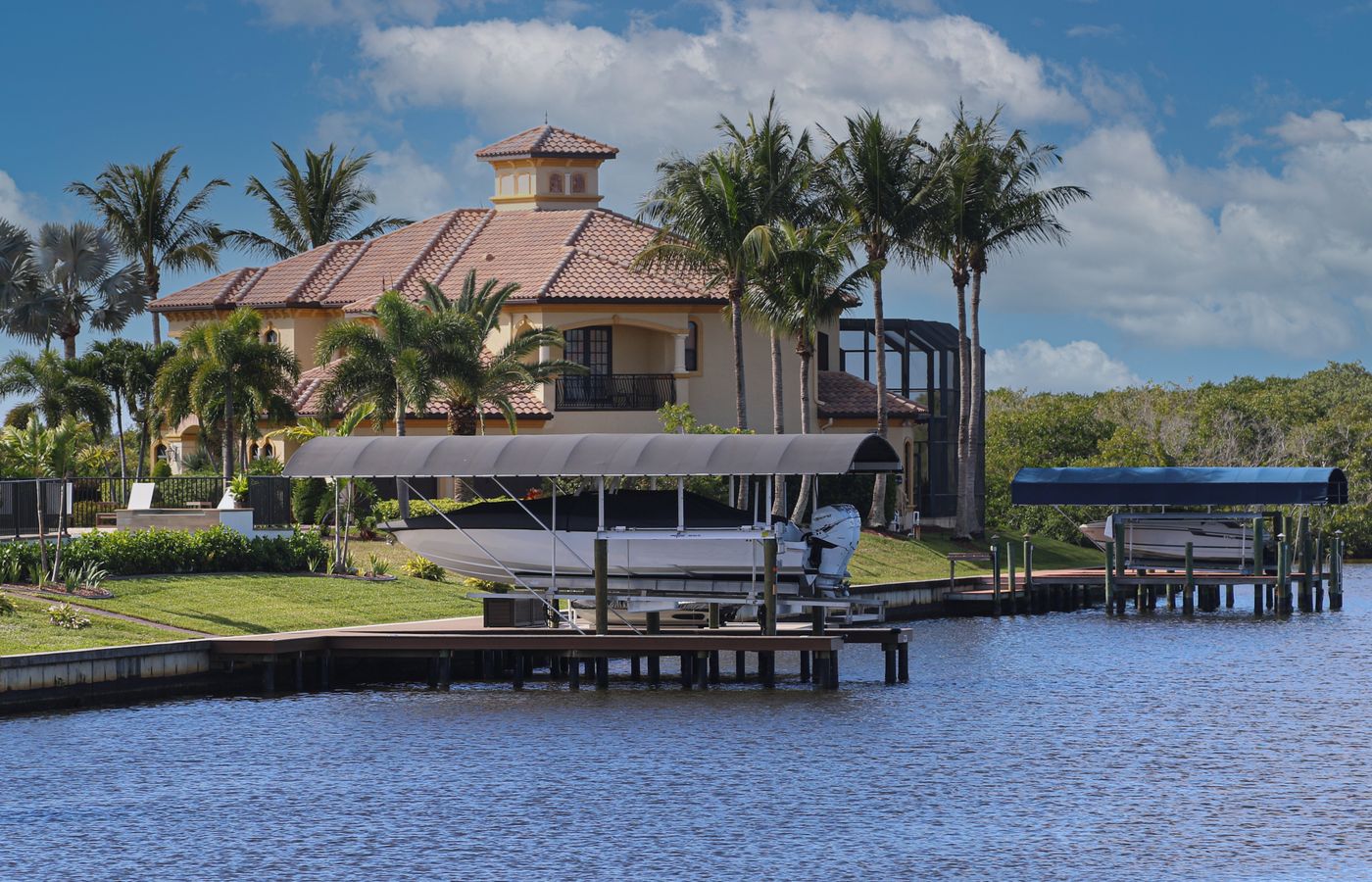
Palm Coast’s canal lots frequently place docks, lifts, utilities and pool enclosures immediately next to the seawall work zone.
- dock pilings and decking;
- boat-lift supports;
- electrical service;
- water lines;
- screened pools and patios;
- narrow side-yard access.
Even if the dock or lift is not part of the repair, it can affect equipment placement and whether work needs to be approached from land, water or both.
The City of Palm Coast Requires a Seawall Permit
Palm Coast’s current land-development regulations require a building permit before new construction, reconstruction or repair of seawalls and revetments.
That makes the local permit requirement explicit: repairing an existing wall is still permit-triggering work rather than an activity that should be assumed exempt from City review.
Palm Coast Has Specific Erosion-Control Rules During Repair
The City’s current seawall and revetment standards go beyond simply requiring a permit. They also require erosion-control measures during construction, reconstruction and repair.
Current rules call for a floating turbidity barrier before work begins and require the seawall returns and backside area to be stabilized so eroded material does not enter the canal or move onto adjacent property.
The standards also require backfill behind an existing wall being reconstructed or repaired so a swale is established to collect eroded material before it reaches the canal.
Backfill and Drainage Should Be Planned Together
A seawall repair is not complete if fill is simply placed behind the wall without addressing how water and eroded material move across the lot.
Palm Coast’s repair standards are useful here because they connect wall repair with backfill, swale formation and stabilization of disturbed ground. That is directly relevant to properties experiencing repeated settlement or erosion behind the cap.
Current Palm Coast Permit Records Show Active Seawall Work
The City’s permit-search system shows current seawall permits being processed in 2026, including canal-front addresses. That confirms seawall work is actively treated as its own permit category rather than being folded into a generic residential repair permit.
The individual permit status of another property does not determine what your project needs, but it reinforces the importance of using the City’s current seawall permit process.
Palm Coast and Unincorporated Flagler County Use Different Local Systems
A Palm Coast mailing address does not always establish City jurisdiction. Property outside City limits can fall under Flagler County permitting instead.
Flagler County maintains a dedicated seawall, dock and boathouse permitting packet for applicable properties. Confirm the parcel jurisdiction before relying on a City of Palm Coast checklist.
Flagler County Also Treats Seawalls as a Dedicated Permit Type
For unincorporated Flagler County, Central Permitting provides separate contractor and owner-builder requirements for seawalls, docks and boathouses.
That means a property just outside Palm Coast can follow a different local submission path even when the waterfront conditions appear similar.
State Environmental Resource Permits Can Apply
Local approval is only one regulatory layer. Work affecting surface waters, wetlands, dredge-and-fill areas or shoreline resources can also fall under Florida’s Environmental Resource Permit system.
In northeast Florida, the St. Johns River Water Management District provides regional permitting resources and ePermit access for applicable projects.
An in-place repair that qualifies for an exemption can follow a different path from new shoreline hardening, substantial waterward relocation or work involving fill in regulated waters.
Federal Authorization May Also Apply
Federal authorization can apply to shoreline work in navigable waters and waters of the United States depending on the activity.
Some qualifying shoreline-stabilization activities can be covered through Florida’s state/federal programmatic permitting process, while other work may require separate U.S. Army Corps review.
A City or County building permit should not automatically be treated as state or federal authorization.
See the Florida seawall permit guide.
Wetlands and Natural Shoreline Can Affect Intracoastal Projects
Intracoastal and creek-side property can include wetlands, marsh, mangroves or other shoreline vegetation in addition to hardened waterfront.
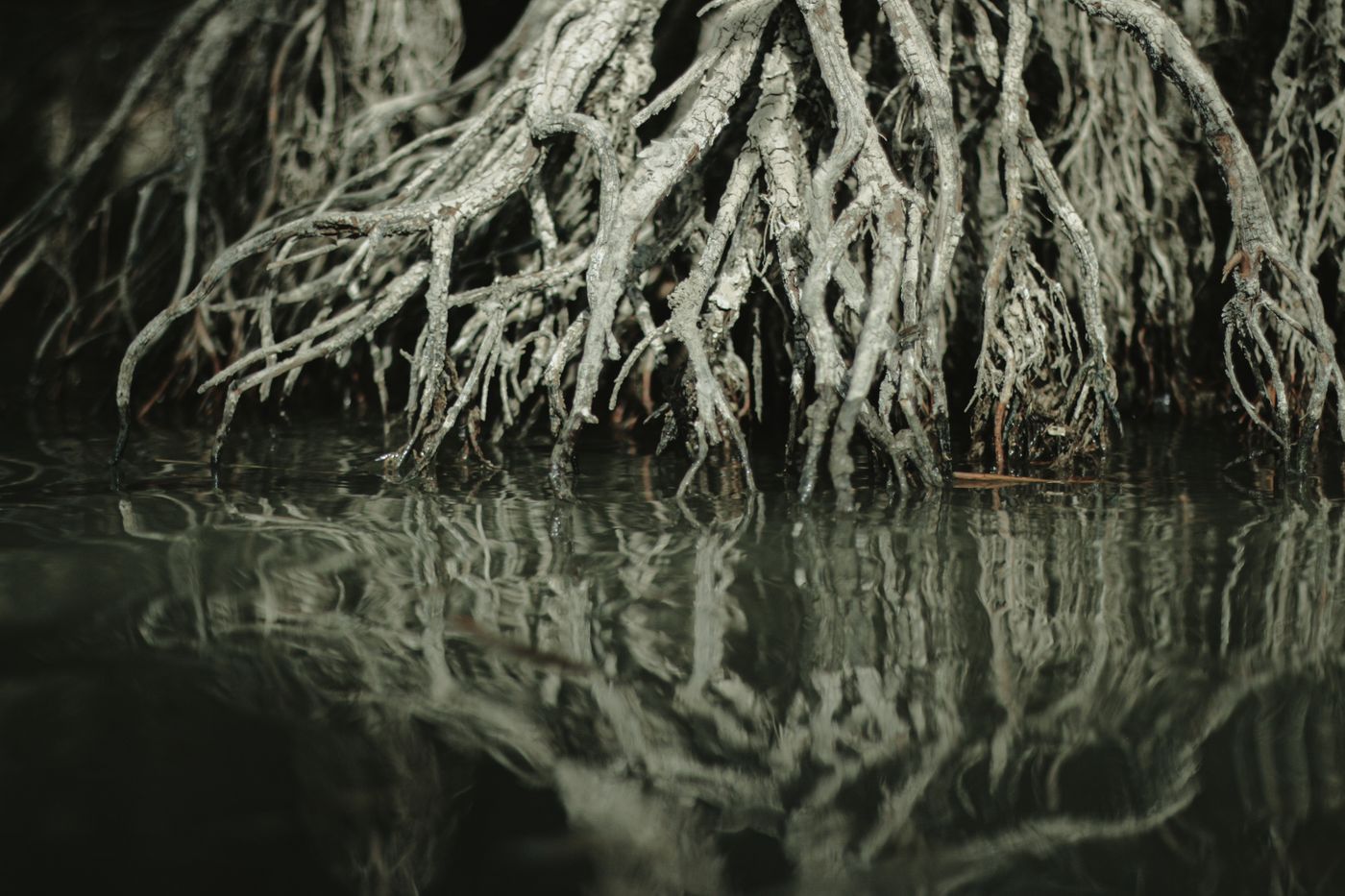
A project near natural shoreline should identify those resources before assuming an existing wall can simply be extended, relocated or moved waterward.
Bulkhead and Seawall Terminology Both Appear in Palm Coast
Palm Coast technical standards and local usage refer to both seawalls and bulkheads. Property owners may use either term for a vertical waterfront retaining structure.
The diagnosis should focus on the actual structure, material, support system and failure mode rather than terminology alone.
Learn more about bulkhead repair in Florida.
Pools, Patios and Limited Canal-Side Access
Developed Palm Coast canal lots can present significant access constraints. Screened pools, paver patios, landscaping, utilities and buildings close to the seawall can affect equipment access and material handling.
Limited land-side access can also affect tieback work and whether some portions of the project need to be approached from the water side.
Repair or Replace a Palm Coast Seawall?
Visible deterioration does not automatically mean complete replacement is necessary.
Repair can remain practical when soil loss is localized, joints can be repaired, suitable voids can be stabilized, cap damage affects limited sections, concrete deterioration is localized, structural support can be restored and most of the wall remains serviceable.
Replacement becomes more likely when movement is substantial or continuing, many sections are deteriorated or displaced, multiple structural components are compromised, previous repairs repeatedly fail or too little serviceable structure would remain after another localized repair.
There is no universal rule that a Palm Coast seawall should be replaced whenever repair reaches a fixed percentage of replacement cost. Condition, alignment, support, deterioration extent, access and regulatory consequences matter more than a generic threshold.
Use the seawall repair vs. replacement decision guide.
Palm Coast Seawall Replacement
If the existing wall no longer provides a practical basis for repair, replacement can involve several coordinated parts of the waterfront property.
- existing wall condition and alignment;
- replacement alignment;
- wall material;
- anchors or structural support;
- cap construction;
- backfill and drainage;
- docks and boat lifts;
- land-side and water-side access;
- engineering;
- City or County permit review;
- state environmental-resource review where applicable;
- federal authorization where applicable.
A deteriorated wall does not automatically create permission to move its replacement farther waterward or change the shoreline footprint. Alignment and environmental impacts should be resolved during design and permitting.
Learn more about seawall replacement in Florida.
See the Florida seawall construction guide.
How Much Does Seawall Repair Cost in Palm Coast?
There is no reliable single Palm Coast repair price per linear foot. Cost depends on the repair type, affected length, wall material, soil loss, void volume, structural movement, dock conflicts, engineering, access and permitting.
A localized joint-and-void repair should not be compared directly with replacement of a long wall that also involves structural support, difficult canal access, drainage reconstruction or environmental review.
See the Florida seawall repair cost guide.
Should Sinking Pavers Be Fixed Before the Seawall?
Usually the cause of the settlement should be investigated first. If pavers are sinking because soil is escaping through or around the seawall, resetting them before correcting the erosion pathway can lead to repeated settlement.
Addressing the seawall-related soil loss first can reduce the risk that the newly repaired surface settles again.
What to Check Before Requesting a Palm Coast Seawall Estimate
- Photograph the complete wall. Include damaged and apparently serviceable sections.
- Document soil loss. Photograph holes, settlement and sinking pavers.
- Check joints and wall ends. Look for openings and visible erosion.
- Inspect the cap. Note cracking, spalling, rust staining and displacement.
- Check wall alignment. Photograph leaning or bowing from an angle that makes movement visible.
- Identify the waterbody. Note whether the property faces an interior saltwater canal or direct Intracoastal frontage.
- Include docks and lifts. Show pilings, decking and utilities close to the wall.
- Document drainage and grade. Show low spots, swales and recurring ponding near the seawall.
- Note previous repairs. Recurring problems can help identify an unresolved failure mechanism.
- Photograph access constraints. Include pools, screened enclosures, patios, utilities and narrow side yards.
Learn what should be checked during a seawall inspection.
When Should a Palm Coast Seawall Be Evaluated?
Consider a closer evaluation when soil washout keeps returning, voids are growing, pavers continue to settle, wall joints are widening, the cap is deteriorating, reinforcement is exposed, the wall is leaning or bowing or several warning signs are developing together.
An evaluation can help distinguish between monitoring, localized erosion repair, structural stabilization and replacement.
Nearby Seawall Repair Areas
St. Augustine Seawall Repair
Local seawall repair guidance for St. Augustine waterfront properties along Matanzas Bay and the San Sebastian River.
View Area GuideJacksonville Beach Seawall Repair
Local seawall repair guidance for Jacksonville Beach oceanfront and Intracoastal-side properties.
View Area GuideJacksonville Seawall Repair
Seawall repair guidance for Jacksonville riverfront, creek and Intracoastal waterfront properties.
View Area GuideAreas We Cover in Seawall Repair in Palm Coast, FL
- Palm Harbor
- C Section
- Yacht Harbor Village
- Hammock Dunes
- Grand Haven