Seawall Repair in Fort Myers Beach, FL
Fort Myers Beach waterfront properties can develop seawall problems ranging from soil washout and open joints to cracked concrete, deteriorated caps, voids and structural wall movement.
The appropriate repair depends on what is actually failing, whether the wall is still structurally serviceable and whether the property faces a canal, bay-side waterway or more exposed Gulf-side conditions.
Fort Myers Beach also has its own Town permitting process. It should not be treated as though the Fort Myers or general unincorporated Lee County permit process automatically applies to a property inside the Town.
Common Seawall Problems in Fort Myers Beach
Waterfront property owners often first notice a seawall problem through changes in the ground behind the wall or movement around nearby waterfront improvements.
- soil washing out behind the seawall;
- holes or depressions near the wall;
- sinking pavers;
- voids beneath waterfront areas;
- open panel joints;
- cracked seawall caps;
- concrete spalling;
- rust staining;
- exposed reinforcing steel;
- leaning or bowing wall sections;
- misaligned panels;
- erosion around wall ends;
- movement around docks or boat lifts.
One visible symptom does not automatically mean the entire wall needs replacement. The pattern of damage and condition of the remaining structure matter more than one crack or isolated low spot.
See the warning signs of a failing seawall.
Soil Washout Behind a Fort Myers Beach Seawall
Soil washout can occur when retained material finds a pathway through or around the seawall.
Possible pathways include:
- open panel joints;
- cracks or damaged wall sections;
- penetrations through the wall;
- erosion at a wall end;
- movement that has opened a new gap.
A typical progression is:
Opening → soil migration → underground void → surface settlement
Replacing missing fill may temporarily restore the yard while leaving the erosion pathway active.
The repair should therefore identify where soil is escaping and whether a void has developed behind the wall.
Learn more about seawall erosion and soil washout.
Voids and Sinking Pavers Near the Seawall
A small surface depression can indicate a larger loss of support below the ground.
Possible signs include:
- pavers dropping along the waterfront edge;
- depressions that return after filling;
- soft ground behind the cap;
- settlement beneath patios or walkways;
- visible openings between wall sections.
The source of the erosion should be addressed before the surface is simply releveled.
Polyurethane Seawall Repair in Fort Myers Beach
Polyurethane injection may be useful for certain void-filling or soil-stabilization projects when the seawall itself remains suitable for repair.
Potential uses can include:
- filling localized voids;
- restoring support beneath settled surfaces;
- stabilizing disturbed soil;
- supporting a broader erosion-repair project.
Polyurethane does not replace failed tiebacks, severely deteriorated panels or another major structural component.
If the wall is visibly moving, the structural cause of that movement should be evaluated separately.
Learn more about polyurethane seawall repair.
Concrete Seawall Repair in Fort Myers Beach
Concrete seawalls can develop localized deterioration without requiring complete wall replacement.
Problems can include:
- cracking;
- spalling;
- rust staining;
- exposed reinforcing steel;
- damaged panel edges;
- deteriorated joints;
- panel displacement.
The repair decision depends on how much concrete is affected, the condition of the reinforcement and whether the wall itself remains aligned and structurally serviceable.
Learn more about concrete seawall repair.
Cracked and Deteriorated Seawall Caps
The cap along the top of a seawall can crack or deteriorate independently from the vertical wall sections below it.
Watch for:
- widening cracks;
- broken concrete;
- spalling;
- rust staining;
- exposed reinforcement;
- uneven or displaced sections.
Localized cap deterioration does not automatically mean the seawall must be replaced.
Cap damage becomes more significant when it occurs together with wall movement, soil loss or widespread panel deterioration.
See the seawall cap repair guide.
Leaning or Bowing Seawalls
A seawall that is visibly leaning toward the water or bowing between sections should be evaluated as a structural condition rather than only a surface defect.
Possible contributing conditions can involve:
- anchor or tieback deterioration;
- panel damage;
- loss of retained soil;
- changes in structural loading;
- foundation or toe conditions;
- several issues occurring together.
Some walls may remain candidates for stabilization or substantial repair. Others may have moved or deteriorated far enough that partial or complete replacement deserves consideration.
Tieback and Anchor Repair
Many vertical shoreline walls rely on anchors, tiebacks or related structural components behind the visible wall.
When wall movement suggests a support-system issue, the evaluation can consider:
- amount of movement;
- whether movement is progressing;
- condition of wall panels or sheets;
- cap condition;
- soil loss;
- available anchor area;
- utilities and improvements behind the wall.
Installing new structural support makes the most sense when the wall being retained is still suitable for continued service.
Gulf Side vs. Back-Bay and Canal Seawalls
Fort Myers Beach properties can face very different waterfront settings depending on which side of the island they occupy.
A seawall along a protected canal, Matanzas Pass or another back-bay setting should not automatically be treated the same as shoreline work exposed directly to Gulf beach and dune conditions.
Site differences can include:
- wave exposure;
- water depth;
- currents;
- boat traffic;
- beach and dune conditions;
- shoreline vegetation;
- permit requirements;
- construction access.
The waterfront setting should be identified before a repair method or permit pathway is assumed.
Fort Myers Beach Has Its Own Permit Process
Fort Myers Beach is an incorporated Town with its own Building Services and permitting process.
New permit applications are currently submitted through the Town’s GOVWELL system.
That means a seawall project inside Fort Myers Beach should not automatically follow the City of Fort Myers or general unincorporated Lee County permit workflow.
The property address and Town jurisdiction should be confirmed before permit documents are prepared.
Stormwater Pollution Protection Plan Requirement
Fort Myers Beach currently requires a Stormwater Pollution Protection Plan form with permit applications for seawall work that will disturb land.
This requirement took effect April 16, 2025 and also applies to several other categories of land-disturbing work within the Town.
For a seawall project, land disturbance can occur through activities such as:
- excavation behind the wall;
- tieback or anchor installation;
- removal and replacement of pavers;
- backfill work;
- site access;
- replacement construction.
The permit package should therefore reflect the actual scope of work rather than treating the seawall as an isolated waterside structure.
Gulf-Side Properties and Florida’s CCCL
Some Fort Myers Beach properties can also be affected by Florida’s Coastal Construction Control Line program.
The CCCL regulates applicable construction and excavation in the beach-and-dune area where special coastal siting and design criteria apply.
This is particularly relevant when proposed work is associated with the Gulf-facing beach rather than a protected interior canal.
Do not assume that a Town seawall permit by itself resolves every state coastal requirement for a Gulf-side property.
See the Florida seawall permit guide.
The FEMA 50% Rule Is Not a Seawall Cost Rule
Fort Myers Beach enforces floodplain substantial-improvement and substantial-damage requirements during applicable plan review.
That should not be confused with a rule saying:
“Replace the seawall whenever repair costs reach 50% of replacement cost.”
Those are different concepts.
Repair-versus-replacement decisions for a seawall should be based on the wall’s condition, remaining serviceable structure and the regulations that actually apply to the proposed shoreline project.
Docks and Boat Lifts Can Affect Seawall Repair
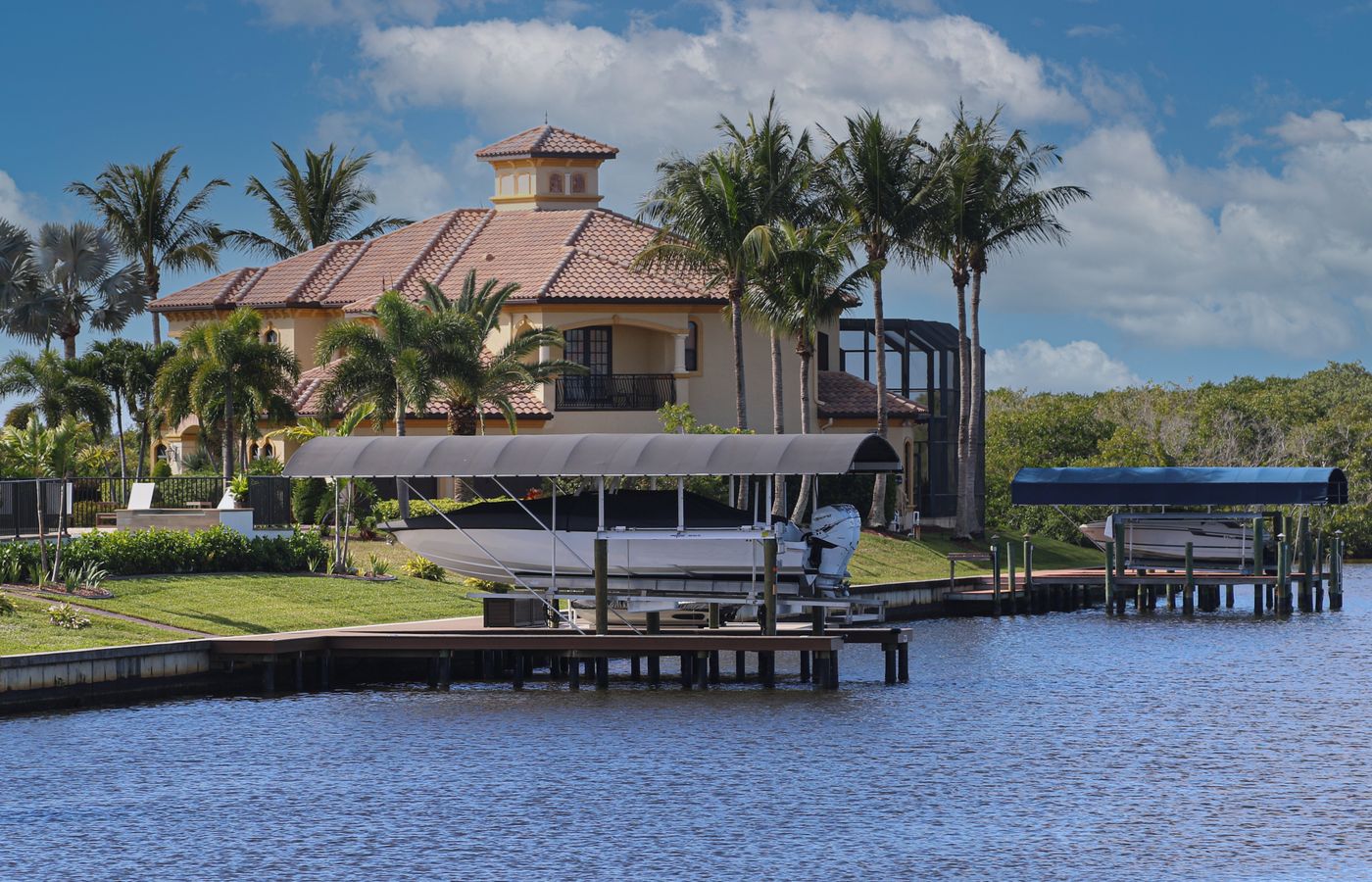
Many Fort Myers Beach waterfront lots have docks, lifts, pilings and utilities close to the seawall.
These features can affect:
- equipment access;
- panel or cap repair;
- anchor installation;
- construction sequencing;
- electrical and water lines;
- temporary modifications to waterfront structures.
The complete marine-work scope should be identified before assuming the seawall repair includes unrelated dock or boat-lift alterations.
Pools, Pavers and Elevated Waterfront Homes
Construction access can be an important issue on developed Fort Myers Beach lots.
Potential constraints include:
- homes close to the waterfront;
- pools;
- patios and pavers;
- stairs and elevated structures;
- landscaping;
- utilities;
- narrow side-yard access.
These conditions can influence whether repair equipment approaches from land, water or both and whether the area behind the wall can be accessed for structural work.
Seawall Damage After Storm or High-Water Conditions
After significant coastal or high-water conditions, compare the seawall with its prior condition rather than assuming every visible defect is new.
Document:
- new soil loss;
- fresh settlement;
- new or widened joints;
- cap displacement;
- concrete damage;
- new wall movement;
- erosion around wall ends;
- changes around docks or lifts.
Dated photographs can help distinguish long-standing deterioration from a condition that is actively progressing.
Repair or Replace a Fort Myers Beach Seawall?
Replacement should not be assumed simply because a wall is old or visibly damaged.
Repair may remain practical when:
- soil loss is localized;
- joints can be repaired;
- voids can be stabilized;
- cap deterioration affects limited sections;
- concrete damage is localized;
- structural support can be restored;
- most of the wall remains serviceable.
Replacement becomes more likely when:
- movement is substantial or continuing;
- many wall sections are deteriorated;
- multiple structural components are compromised;
- previous repairs repeatedly fail;
- too little sound structure would remain after another repair.
Use the seawall repair vs. replacement decision guide.
Fort Myers Beach Seawall Replacement
If the existing wall no longer provides a practical basis for repair, replacement can require coordination across several parts of the property.
- existing wall condition;
- replacement alignment;
- wall material;
- anchors or other structural support;
- cap construction;
- backfill and drainage;
- docks or boat lifts;
- land and water access;
- Town permitting;
- state and federal requirements where applicable;
- coastal review for qualifying Gulf-side work.
Learn more about seawall replacement in Florida.
How Much Does Seawall Repair Cost in Fort Myers Beach?
There is no reliable single Fort Myers Beach seawall repair price per linear foot.
Cost can depend on:
- the problem being repaired;
- length of wall actually affected;
- soil loss and void volume;
- concrete condition;
- cap deterioration;
- wall movement;
- anchors or tiebacks;
- land-side access;
- water access;
- docks and lifts;
- engineering;
- permit requirements;
- coastal requirements where applicable.
A localized erosion repair on a protected canal and structural reconstruction on a more exposed waterfront wall should not be expected to have the same cost simply because both are located in Fort Myers Beach.
See the Florida seawall repair cost guide.
What to Check Before Requesting an Estimate
- Photograph the complete wall. Include both damaged and apparently serviceable areas.
- Document soil loss. Show holes, voids and sinking pavers.
- Check wall joints. Look for separation and sediment movement.
- Inspect the cap. Note cracking, spalling, rust staining and displacement.
- Check wall alignment. Document leaning or bowing.
- Include docks and lifts. Show waterfront structures that can affect access.
- Identify the waterfront setting. Note whether the property faces a canal, back bay, pass or Gulf-side shoreline.
- Document previous repairs. Recurring deterioration can help identify unresolved causes.
Learn what should be checked during a seawall inspection.
When Should a Fort Myers Beach Seawall Be Evaluated?
Consider a closer evaluation when you notice:
- recurring soil washout;
- growing voids;
- sinking pavers;
- widening joints;
- major cap cracking;
- extensive concrete deterioration;
- exposed reinforcing steel;
- wall leaning or bowing;
- new displacement after high-water conditions;
- several related warning signs occurring together.
Evaluation does not automatically mean major construction is required. It helps distinguish monitoring, localized erosion repair, structural stabilization and replacement.
Request a Fort Myers Beach Seawall Evaluation
If your Fort Myers Beach seawall is losing soil, cracking, deteriorating or moving, document both the wall and surrounding waterfront property.
Helpful information includes:
- property location;
- approximate seawall length;
- canal, back-bay or Gulf-side setting;
- wall material, if known;
- soil washout or voids;
- sinking pavers;
- concrete or cap deterioration;
- wall movement;
- dock or boat lift present;
- previous repairs;
- clear photographs.
The information can be used to better understand the likely repair scope and, where available, connect the request with an appropriate marine professional serving Fort Myers Beach.
Nearby Seawall Repair Areas
Fort Myers Seawall Repair
Seawall damage, erosion, repair options and permitting guidance for Fort Myers waterfront properties.
View Area GuideSanibel & Captiva Seawall Repair
Island-specific seawall repair guidance for Sanibel and Captiva waterfront properties.
View Area GuideBonita Springs Seawall Repair
Local seawall repair guidance for Bonita Springs waterfront properties, canals and coastal exposure.
View Area GuideAreas We Cover in Seawall Repair in Fort Myers Beach, FL
- North End
- Mid Island
- South End
- Estero Island
- San Carlos Island