Seawall Repair in St. Petersburg, FL
St. Petersburg waterfront properties can develop seawall problems ranging from soil washout and sinking ground to cracked concrete, damaged caps, open joints and structural wall movement.
The appropriate repair depends on what is actually failing, how much of the seawall is affected, whether the remaining structure is suitable for repair and whether the property faces Tampa Bay, Boca Ciega Bay, a residential canal, a bayou or another tidal shoreline.
Permitting is layered. Work inside St. Petersburg can involve City engineering or building review, while Pinellas County Water and Navigation separately handles permits for seawalls, riprap, dredging and filling in County waters, including projects within municipal limits.
Common Seawall Problems in St. Petersburg
A seawall problem can first become visible in the yard behind the wall rather than through an obvious structural break.
- soil washing out behind the seawall;
- holes or depressions near the waterfront edge;
- sinking pavers or patios;
- voids behind the wall;
- open joints between panels;
- cracked or displaced seawall caps;
- concrete spalling and rust staining;
- exposed reinforcing steel;
- leaning or bowing wall sections;
- misaligned panels;
- erosion near wall ends;
- movement around docks or boat lifts.
One visible defect does not automatically mean complete replacement is necessary. A localized joint-and-erosion problem can require a very different repair from a long section of seawall that has lost alignment or structural support.
See the warning signs of a failing seawall.
Soil Washout Behind a St. Petersburg Seawall
Soil washout develops when retained material finds a pathway through, beneath or around the seawall. Open joints, cracks, penetrations, wall movement, drainage conditions and erosion near wall ends can all contribute.
A common progression is:
Opening or erosion pathway → soil migration → underground void → surface settlement
Adding fill may improve the surface temporarily while leaving the pathway responsible for the loss active. A more complete repair should address both where soil is escaping and whether support behind the wall also needs to be restored.
Learn more about seawall erosion and soil washout repair.
Voids and Sinking Pavers Near the Seawall
A relatively small depression at the surface can sometimes indicate a larger underground void. Warning signs include pavers dropping toward the waterfront, soft ground behind the cap, holes that repeatedly return, gaps beneath patios and settlement concentrated near panel joints.
The source of the erosion should be investigated before the surface is simply releveled or repaved.
Polyurethane Seawall Repair in St. Petersburg
Polyurethane injection may be useful for certain void-filling and soil-stabilization conditions behind a seawall that remains structurally suitable for repair.
- filling localized voids;
- restoring support beneath settled areas;
- stabilizing disturbed soil;
- supporting a broader erosion-repair project.
Polyurethane is not a substitute for failed anchors, severely deteriorated panels or a wall experiencing substantial movement. The structural condition still needs to be evaluated when displacement is visible.
Learn more about polyurethane seawall repair.
Concrete Seawall Repair in St. Petersburg
Concrete seawalls can develop localized deterioration while substantial portions of the structure remain serviceable.
- surface and structural cracking;
- spalling concrete;
- rust staining;
- exposed reinforcing steel;
- damaged panel edges;
- deteriorated joints;
- panel displacement.
The repair decision depends on the extent of deterioration, the condition of reinforcement and whether the seawall remains structurally aligned.
Learn more about concrete seawall repair.
Cracked Seawall Cap Repair
The concrete cap can deteriorate separately from the vertical wall below it. Cap damage can include cracking, spalling, rust staining, exposed reinforcement, broken corners and displacement between cap sections.
Localized cap deterioration does not automatically mean the panels below need replacement. It becomes more significant when cap damage occurs together with wall movement, panel displacement or recurring soil loss.
See the seawall cap repair guide.
Does a Cracked Cap Mean the Seawall Must Be Replaced?
No. A cracked or deteriorated cap can sometimes be repaired while the wall below remains serviceable. Replacement becomes more relevant when cap damage appears together with substantial movement, widespread panel deterioration, failed structural support or repeated repair failure.
The cap should be evaluated as one part of the complete seawall system rather than used by itself as the replacement decision.
Leaning or Bowing Seawalls
A seawall that is visibly leaning toward the water or bowing along part of its length should be evaluated as a structural condition rather than treated only as a surface defect.
- anchor or tieback deterioration;
- wall-panel damage;
- loss of retained soil;
- changes in loading behind the wall;
- toe or foundation conditions;
- multiple interacting problems.
Some seawalls may remain candidates for stabilization. Others may have moved or deteriorated far enough that partial or complete replacement becomes more practical.
Tiebacks, Anchors and Structural Support
Many seawalls rely on anchors, tiebacks or related support systems located behind the visible wall. When movement is present, an evaluation should consider the amount and progression of movement, panel condition, cap condition, soil loss, existing support and available land-side access.
Pools, patios, utilities, landscaping and buildings close to the waterfront can affect whether conventional land-side support work is practical.
St. Petersburg Has Multiple Waterfront Environments
St. Petersburg is bordered by several distinct waterfront environments, including Tampa Bay to the east, Boca Ciega Bay to the west and south, residential canals, bayous and smaller tidal waterways.
These settings can differ in wind exposure, wave action, boat wake, tidal movement, water depth, shoreline vegetation and access. A protected residential canal wall should not automatically be treated the same as a more open bayfront seawall.
Tampa Bay-Facing Seawalls
Properties facing Tampa Bay can experience more open-water exposure than protected residential waterways. Wind-driven waves, storm surge, tidal conditions and long waterfront reaches can influence how deterioration appears and how a repair is accessed.
When the wall is part of a longer shoreline shared with neighboring properties or public infrastructure, alignment and transitions at the wall ends should be documented carefully.
Boca Ciega Bay and Canal-Front Properties
Boca Ciega Bay and connected canal systems create a different residential waterfront environment. Docks, boat lifts, narrow side yards, pools and screen enclosures can make access a central part of the repair plan.
Protected water does not eliminate erosion or structural deterioration. Joint leakage, soil loss, cap damage and wall movement can still progress behind an apparently calm shoreline.
Bayous and Natural Shoreline Transitions
St. Petersburg also includes bayous and shoreline areas where hardened waterfront transitions into mangroves, wetlands or other natural shoreline. These transitions can affect erosion patterns near wall ends and may add environmental-review considerations.
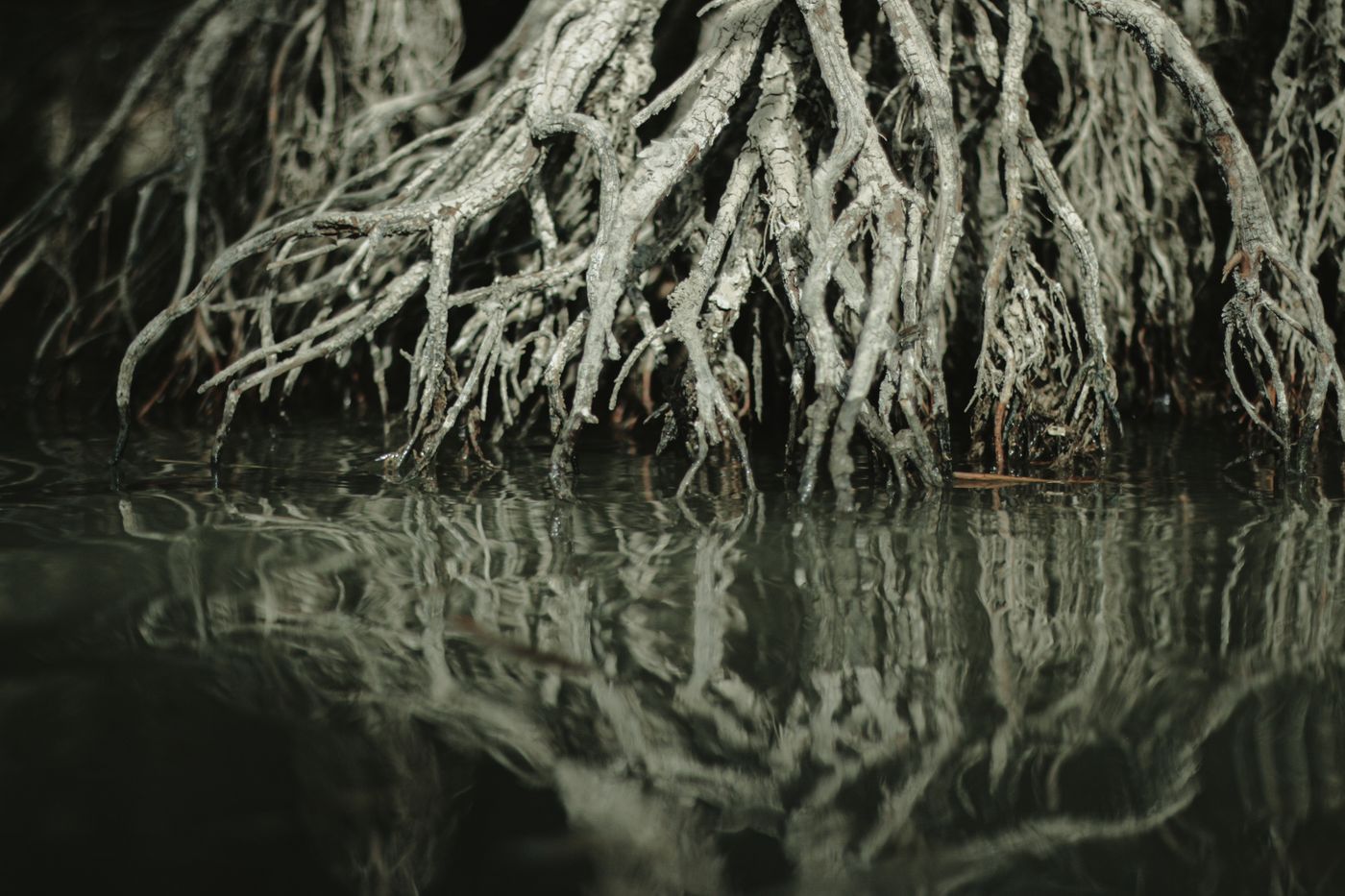
Where the problem is concentrated near a transition between seawall and natural shoreline, the repair should consider both the wall defect and the adjacent erosion pathway.
City of St. Petersburg Seawall Permits
City materials identify a dedicated engineering permit process for construction of seawalls and placement of riprap, including a separate category for non-structural seawall repairs.
That means seawall work inside City limits should not be treated as ordinary landscaping or a cosmetic waterfront repair. The structural scope, location and relationship to public easements or rights-of-way can affect the City review.
Current application requirements should be confirmed with the City before submittal because permit forms, engineering requirements and fee schedules can change.
Pinellas County Water and Navigation Review Also Matters
Pinellas County’s Water and Navigation section permits seawalls, riprap and dredge-and-fill work in County waters. Importantly, the County states that this review applies both in unincorporated Pinellas County and within municipal limits.
Projects are reviewed for environmental impacts, navigational impacts, construction requirements and consistency with the Pinellas County Water and Navigation Code.
For a St. Petersburg waterfront project, this means City approval and County Water and Navigation review can be separate layers rather than alternatives to one another.
Building Permits and Water-Side Permits Are Different Layers
A structural building or engineering permit addresses different issues from a water-and-navigation permit. One can focus on the wall as a constructed structure, while the other addresses work in or affecting County waters, navigation and environmental resources.
Do not assume that approval from one agency automatically satisfies the other. Confirm every local layer that applies to the parcel and proposed scope.
Repairing an Existing Wall and Changing the Shoreline Are Different
Repairing an existing wall in place is different from introducing new shoreline hardening, substantially moving the wall waterward, adding major rock beyond the existing shoreline or placing fill in regulated waters.
The more a project changes the shoreline footprint, the less useful it is to rely on assumptions from a straightforward in-place repair.
This distinction can affect engineering, Water and Navigation review, environmental permitting and overall project feasibility.
State and Federal Requirements Can Also Apply
City and Pinellas County approval are only the local regulatory layers. Florida environmental permitting can also apply to shoreline work, and federal authorization may apply depending on the waterbody and scope.
Work involving dredge or fill, wetlands, submerged lands, mangroves, seagrass or other regulated resources can require additional review.
An approval or exemption under one program should not automatically be treated as authorization under every other applicable program.
See the Florida seawall permit guide.
Mangroves and Shoreline Vegetation Can Affect the Project
St. Petersburg’s bay and bayou shorelines include mangroves and other natural vegetation in addition to hardened waterfront. Those resources can affect access, wall alignment and environmental review.
Florida allows certain limited mangrove alteration associated with qualifying seawall maintenance or repair, but broader trimming or removal should not be assumed to be automatically exempt. The site conditions should be verified before vegetation is disturbed.
Living Shoreline Elements May Be Relevant in Some Settings
Pinellas County promotes living-shoreline approaches and notes that living-shoreline elements can sometimes be added in front of an existing seawall.
That does not mean a failing structural wall can be replaced by vegetation alone. It means shoreline stabilization can include habitat-oriented elements in suitable locations, subject to the wall condition and permitting requirements.
Docks and Boat Lifts Can Affect St. Petersburg Seawall Repair
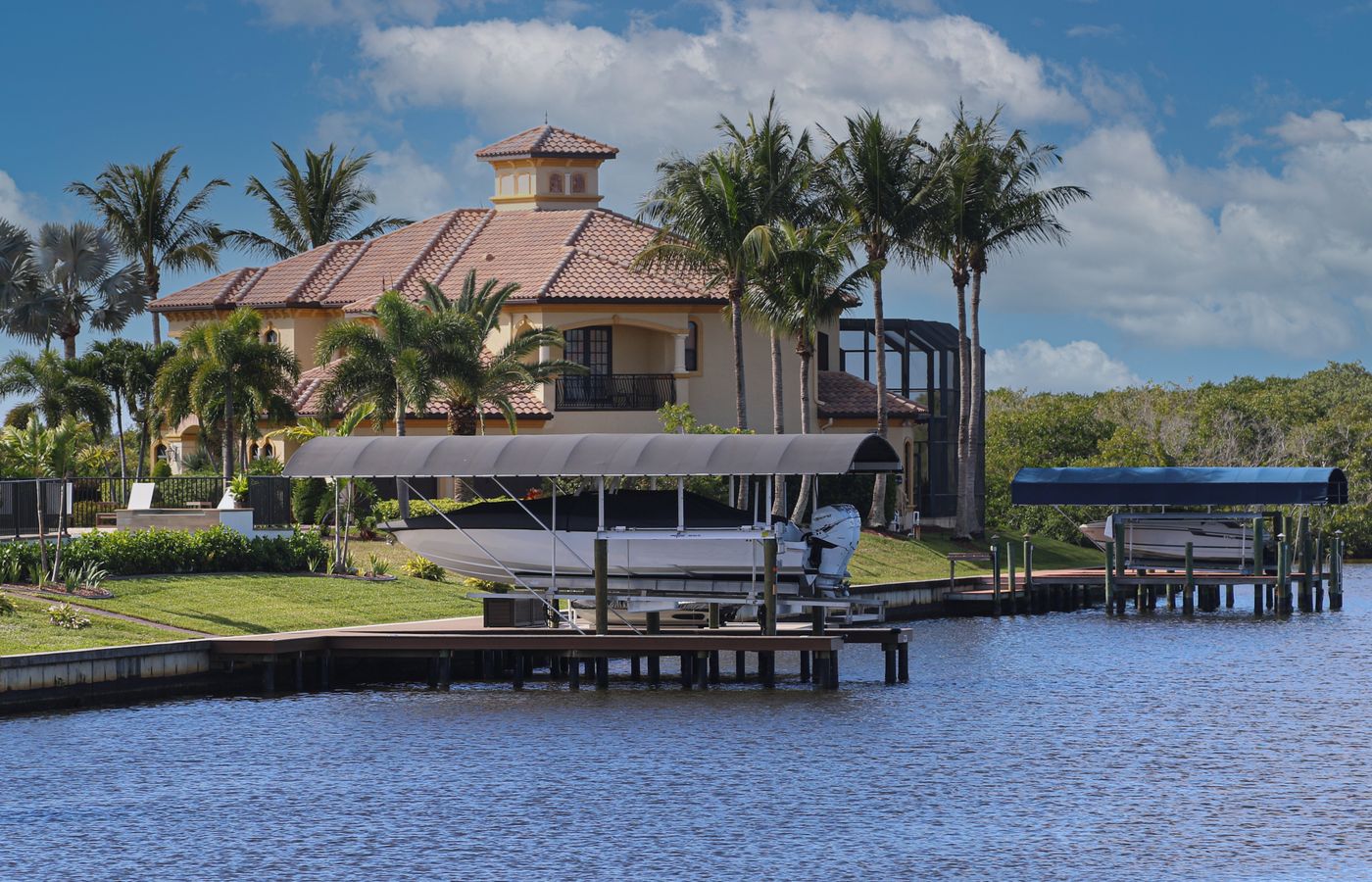
Docks, boat lifts, pilings and waterfront utilities frequently occupy the same work area as the seawall. Even when they are not themselves being repaired, they can restrict access, affect equipment positioning and complicate structural work.
- dock pilings and decking;
- boat-lift supports;
- electrical service;
- water lines;
- stairs and waterfront walkways;
- connections between the yard and dock.
If dock or lift work is also part of the project, identify it in the actual permit scope rather than assuming that a seawall approval automatically covers every nearby waterfront structure.
Pools, Patios and Limited Waterfront Access
Developed St. Petersburg waterfront lots can present significant access constraints. Pools, screen enclosures, paver patios, landscaping, utilities and buildings close to the waterfront can affect equipment access and material handling.
Limited land-side access can also affect tieback work and whether some portions of the project need to be approached from the water side.
Repair or Replace a St. Petersburg Seawall?
Visible deterioration does not automatically mean complete replacement is necessary.
Repair can remain practical when soil loss is localized, joints can be repaired, suitable voids can be stabilized, cap damage affects limited sections, concrete deterioration is localized, structural support can be restored and most of the wall remains serviceable.
Replacement becomes more likely when movement is substantial or continuing, many sections are deteriorated or displaced, multiple structural components are compromised, previous repairs repeatedly fail or too little serviceable structure would remain after another localized repair.
There is no universal rule that a St. Petersburg seawall should be replaced whenever repair reaches a fixed percentage of replacement cost. Condition, alignment, support, deterioration extent, access and regulatory consequences matter more than a generic threshold.
Use the seawall repair vs. replacement decision guide.
St. Petersburg Seawall Replacement
If the existing wall no longer provides a practical basis for repair, replacement can involve several coordinated parts of the waterfront property.
- existing wall condition and alignment;
- replacement alignment;
- wall material;
- anchors or structural support;
- cap construction;
- grade transition and drainage;
- docks and boat lifts;
- land-side and water-side access;
- engineering;
- City permitting;
- Pinellas County Water and Navigation review;
- state or federal authorization where applicable.
A deteriorated wall does not automatically create permission to move its replacement farther waterward or change the shoreline footprint. Alignment and shoreline impacts should be resolved during design and permitting.
Learn more about seawall replacement in Florida.
How Much Does Seawall Repair Cost in St. Petersburg?
There is no reliable single St. Petersburg repair price per linear foot. Cost depends on the repair type, length actually affected, wall material, concrete condition, soil loss, void volume, wall movement, structural supports, access, docks and lifts, engineering and permitting.
A localized joint-and-void repair should not be compared directly with replacement of a long wall that also involves structural support, difficult access, marine permitting or work affecting regulated waters.
See the Florida seawall repair cost guide.
Should Sinking Pavers Be Fixed Before the Seawall?
Usually the cause of the settlement should be investigated first. If pavers are sinking because soil is escaping through or around the seawall, resetting the pavers before correcting the erosion pathway can lead to repeated settlement.
Addressing the seawall-related soil loss first can reduce the risk that the newly repaired surface settles again.
What to Check Before Requesting a St. Petersburg Seawall Estimate
- Photograph the complete seawall. Include damaged and apparently serviceable sections.
- Document soil loss. Photograph holes, settlement and sinking pavers.
- Check joints and wall ends. Look for openings and visible erosion.
- Inspect the cap. Note cracking, spalling, rust staining and displacement.
- Check wall alignment. Photograph leaning or bowing from an angle that makes movement visible.
- Include docks and lifts. Show pilings, decking and utilities near the wall.
- Identify the waterfront setting. Note whether the property faces Tampa Bay, Boca Ciega Bay, a bayou or a residential canal.
- Document shoreline vegetation. Show mangroves or natural shoreline near the work area.
- Note previous repairs. Recurring problems can help identify an unresolved failure mechanism.
- Photograph access constraints. Include pools, patios, utilities, landscaping and narrow side yards.
Learn what should be checked during a seawall inspection.
When Should a St. Petersburg Seawall Be Evaluated?
Consider a closer evaluation when soil washout keeps returning, voids are growing, pavers continue to settle, wall joints are widening, the cap is deteriorating, reinforcement is exposed, the seawall is leaning or bowing or several warning signs are developing together.
An evaluation can help distinguish between monitoring, localized erosion repair, structural stabilization and replacement.
Nearby Seawall Repair Areas
Tampa Seawall Repair
Local seawall repair guidance for Tampa Bay, riverfront and canal properties within the City of Tampa.
View Area GuideClearwater Seawall Repair
Local seawall repair guidance for Clearwater, Clearwater Beach and nearby waterfront properties.
View Area GuideApollo Beach Seawall Repair
Canal and Tampa Bay seawall repair guidance for Apollo Beach waterfront properties.
View Area GuideAreas We Cover in Seawall Repair in St. Petersburg, FL
- Shore Acres
- Snell Isle
- Venetian Isles
- Coquina Key
- Broadwater